TALES FROM FLAY-WOMAN CRICK (PT. 2)
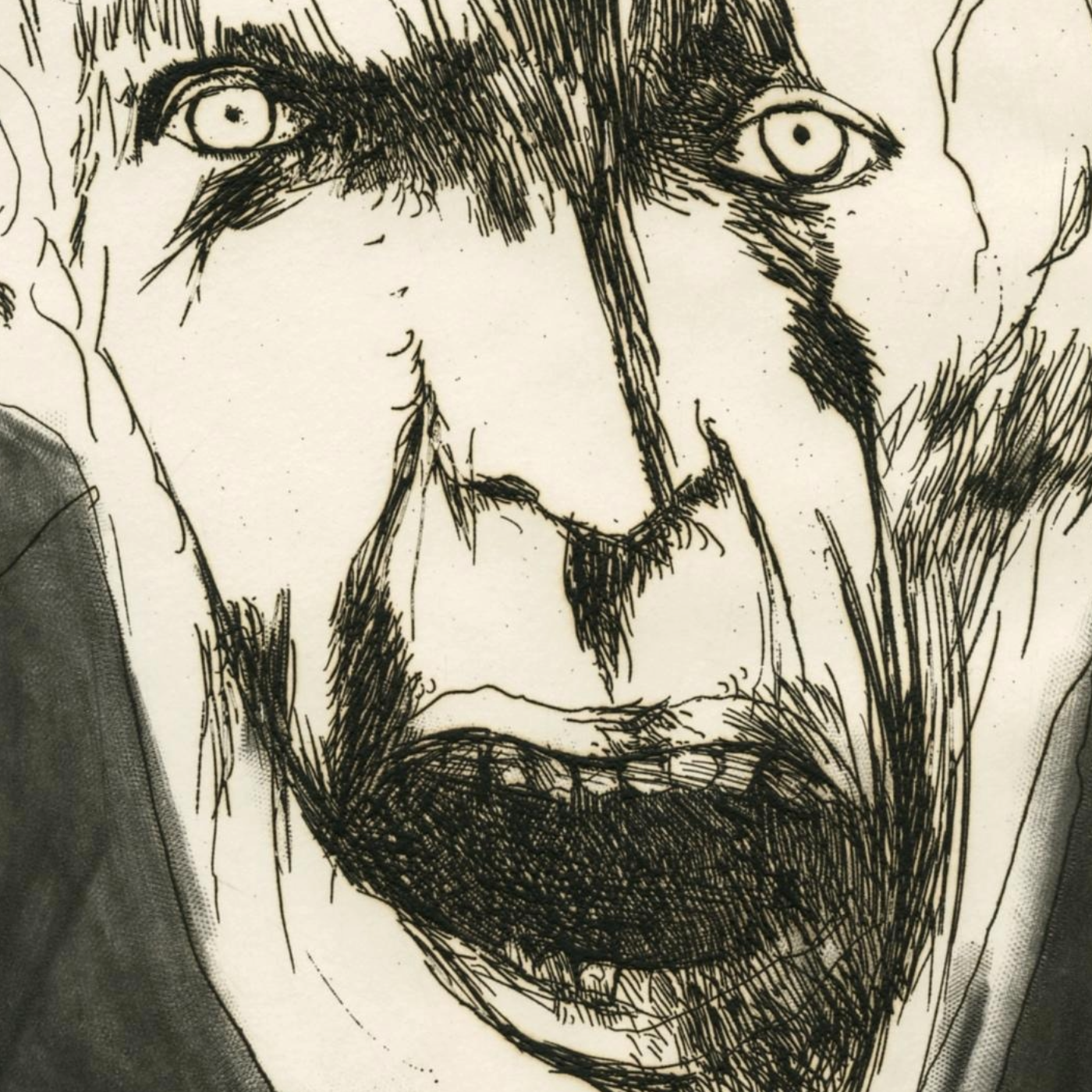
[5 August, 2015 – Interview Two: Edie Wainsbrook]
The parlor of Charleton House could have been the set of a John Waters movie. Mahogany furniture with pastel-pink upholstery; marble-topped credenzas covered with Precious Moments figurines; floral wallpaper that was just the slightest bit unaligned – all instruments played an aria on decadence.
Edie Wainsbrook speaks with a sophisticated drawl undercut by a valley-girl-ish inflection that makes every statement sound like a question. Imagine a teenybopper acting in a Tennessee Williams play. That’s Edie, to a tee.
She reclines on a chaise lounge, and eyes me through a pair of horn-rimmed glasses. Even though it’s nearly 11 AM, she still wears a velour pajama suit. Her hair – done up in an old-school beehive style – and her makeup are immaculately made.
“I was wonderin’ what time I could expect you downstairs,” she said.
I apologized – told her I was up late the night before writing. She waves me off:
“No need for sorries. You’re a hardworking young man who needs sleep. You had better –” She yawns loudly and dramatically. “You had better get as much rest as you can before it catches up to you in your old age.”
I offer a smile. “Please, Miss Edie, you’re not old.”
Edie looks like I just spit on her floor. “Who said I was?”
“Oh… Oh, I’m so sorry…”
“Ah, I’m just playin’ with you. Take a seat.” She smiles and offers me a chair. In stark contrast against her perfectly made-up face, her teeth are crooked and mangled. “What would you like to talk about, sweetie?” she asked.
“Well… I heard Charleton House has a history of tragedy – ”
“I’m already gonna stop you, Mr. Madison,” she interjects. “I had an inkling you were gonna ask, so apologies for not prefacing with this, but I’m not in the mood for telling ghost stories. My husband and I bought Charleton House in 1982. It was in shambles then. Tons of bad juju attached to the place, y’know? It took a lot of time and a lot of money to rehabilitate the House’s image.” Edie scowls, “I’d hate to sully that image with talk of scandal. The last thing I’d ever want for Charleton House is for it to be fodder for some ghost tour.”
I assured her my intentions were purely educational.
“Who all’s gonna be reading your paper?” she asked.
“Old men who vacation in upstate New York, not in rural Texas.”
Her bare feet scrunched up, showing me her painted toenails. “And are any of these old men bachelors?”
I replied, “I’m sure some are… but they’re much too old for you, Miss Edie.”
She winked, and bore her crooked teeth. “Good answer,” she said.
***
Charleton House was built in 1901 by Aston Charleton, and his wife, Lillibet. Mr. Charleton was an Englishman who inherited his wealth from his father, a prolific industrialist who owned several chemical plants in London. Aston was the baby of the family, and he abdicated everything regarding his father’s business to his older brothers. In exchange, Aston received a generous stipend, paid out every month, to fund his extravagant lifestyle. He took his fortune with him to Chicago. There, he found bounteous booze and bounteous women.
Enter Lillibet Charleton. Documentation-wise, the woman did not exist before 1899 – the year she married Mr. Charleton. She was probably a whore. Or a vaudeville dancer. Nevertheless, Aston was debilitatingly in love.
As pathetic as it may sound, they honeymooned here. It wasn’t so pathetic at the time; Plentiful Wells back then was known for luxurious spas and bathhouses that tapped into the underground mineral springs. We were called ‘The Baden-Baden of the South’. Ha! Imagine being told that and never having gone below the Mason-Dixon before. I’m sure a lotta those Yankees felt pretty cheated once they got here and saw barefoot Mexican children running around. But, I suppose that wasn’t the case for the newlyweds: they loved Plentiful Wells, and Aston swore to his wife they’d begin a new life here.
This house is his promise fulfilled. They were happy for twelve years.
December, 1913. Aston and Lillibet attended a Christmas banquet hosted by friends. While there, Mr. Charleton noticed his wife was missing a string of pearls that she normally paired with the particular dress she was wearing. Lillibet Charleton admitted, upon her husband’s interrogation, she couldn’t find the necklace in her jewelry drawer. Guests reported Aston becoming incensed, and whisking her away.
The Charletons employed a cadre of servants, and Aston suspected one of them of thievery. Mr. Charleton searched the servant quarters, and found a pawn slip for the necklace. The signature above the dotted line belonged to Harold Lafayette, the Charleton’s colored chef.
Harold was promptly apprehended by the police, but he wasn’t done with the Charletons just yet. After the arrest, Mrs. Charleton suddenly fell ill. Whispers around town insisted that Harold tainted the Charleton’s food stock before he was discovered. Rumor was: Harold wanted to poison the Charletons so he could steal everything and run away to Pensacola.
It was a long illness. For months, Mrs. Charleton could not leave the house. Mr. Charleton would not. Lillibet’s condition drove Aston mad. He declared no one – not even doctors – were allowed to see his wife.
Of course, Lillibet died.
As her body turned cold in the master bedroom, Mr. Charleston went to the foyer, tied a length of rope to the second story deck rails, put the noose on his neck, and jumped. The rope tightened so quick, it nearly decapitated him. Nearly…
Both husband and wife were discovered weeks later, in July. You can imagine what several weeks of Texas heat does to a body. The House remained abandoned until my husband and I purchased it in 1982.
Oh, yes. I nearly forgot. You wanted to hear if I had any… “ghostly encounters”. Well, I’m afraid I must disappoint. Nothing – in my thirty-two years of taking care of this estate – nothing supernatural has ever happened to me.
But… something has happened to my husband.
The House had extensive structural damage, and the first two years after our purchase was spent on costly renovations. Once those were completed, I think Robert wanted to boost my morale a bit. Even though nothing substantial on the interior was fixed, he hired painters to give the House a new façade.
Now my Robert was not a lazy man. He was the type of sorehead who wouldn’t let other people do a job for him without his help. Every day those fellas were here, Robert was right up there with them, smiling down from the scaffolding, rollerbrush in his hand.
One day, he was doing some detail-work on the House’s rear. He was knelt down, handbrushing the latticework beneath a window on the second floor. The sound of ripping fabric broke his focus. Robert thought the painters were tearing a length of tarp for some unknown reason. He turned, and glanced down.
None of the painters were there. That’s odd. Robert looks to the left and right. No painters on the scaffolding, either, even though they were just up there with him.
There was another rip. Robert realized the sound wasn’t coming from behind him, nor was it coming from either side of him. It was right in front of him.
It was inside the House.
At that point, we – Robert and I – had been in the House sparingly, and any contractors who had access to the building were on furlough until the painters had finished their work. Absolutely no one should have been in that house.
But someone was.
Through layers of scum that coated both sides of the glass, Robert could make out the faintest form of a person. They were squatting on the rotten floorboards, fussing with something intangible on the floor. Suddenly, the figure’s arms parted, and spread vigorously. The ripping noise followed. The figure was shredding a piece of fabric: again and again and again.
Robert didn’t scare easy; like I said, he was an old sorehead. But something about the scene in front of him felt wrong. Biblically wrong. Well, even an old sorehead knows not to bet the devil his head. So he turned tail and ran.
Several months later, we brought the contractors back to begin all the interior renovations. In the master bedroom, one of the men found an old wedding dress, circa the early 1900’s. It was torn to shreds.
Well… That was the story Robert told me for seventeen years. Then, a few days before his cancer widowed me, Robert revealed everything he tried to forget for all seventeen of those long, long years.
On his deathbed, Robert told me the part of the story he kept secret.
See, Robert never turned and ran.
Through the window, Robert saw that the thing wore some sort of black mask. It covered the entire head, and sagged like a wet burlap sack. The dirt on the window kept him from seeing more. So, to get a better look, he rubbed at the grime.
Like a genie in a lamp, the figure awoke once Robert’s palm touched the glass. It immediately stopped; cocked its head to the side. The silhouette around the head shifted. What looked like a piece of fabric on the side of the thing’s face lifted slightly. Robert said it looked like a wet sock being puppeteered by a fishing line. He would find out shortly that that piece of fabric was the thing’s ear.
Maybe a cloud moved, and cast sunlight into the room. Maybe one of hell’s spotlights flicked on, and illuminated the farce. Maybe the thing just forced Robert to picture it all in his mind through pure, demonic willpower. However it happened, the room was awash in white, phosphoric light.
The thing stood up awkwardly, like a Mardi Gras clown on stilts. It was as tall as the room was, and its knees were bent the wrong way. Nevertheless, Robert could see it was a man. He saw… it’s…
Oh Christ, this is disgusting, but I only mention it because my Robert would never talk to me in this horrible, sordid, disgusting way…
He saw its… member. Fully erect. Long as a yardstick. It was covered in sores.
Finally, Robert saw the man’s face. I don’t think I’ll ever forget how Robert looked as he described this in the hospital room. How his grey eyes widened, and nearly burst out of the withered sockets. Robert was always devout, but he had the face of a man who knew he was going to Hell, and knew exactly what kind of things were waiting for him.
The man was not wearing a mask. That black burlap covering his head was flesh.
On top of the too-tall body was the head of an old hound-dog. The dog’s maw opened, and barked at Robert. What came out, though, was the wailing of a baby.
***
[5 August, 2015 – Post-Mortem]
Edie Wainsbrook sobbed. Just like Doug Greschke, my conversation brought up something long-forgotten. A part of me felt remorse for having caused these people any untoward pain, but I also knew it came with the profession.
In underdeveloped parts of the world (and if you don’t think parts of America are underdeveloped, I have some bad news for you), people either don’t have access to therapy, or there’s a stigma surrounding it. Sometimes, if you just let people talk for a long time, their deep-seated trauma will reveal itself in unexpected ways.
Edie’s story seems rife with symbolism correlating with sexual trauma; the torn wedding dress; the tall, overbearing man; the massive “member”. Maybe Old Robert knew he was going to hell because he was a rapist?
I search the room for a tissue-box, and offer it to Edie once I find it. I thank her for her time and her contribution.
“I’m… I’m so sorry. I guess I’ve been keeping that bottled up for so long. What a horrible, horrible story,” she says.
“Edie, do you think it’s possible that Robert was seeing things or having bad dreams in those last few days?”
She blows her nose, folds the tissue, and wipes away stray pieces of phlegm from her upper lip. “I suppose…”
I tell her that people sometimes have trouble distinguishing dreams from reality when they’ve undergone extensive chemo. It’s bullshit. I guess it worked, though, since she just sits there quietly. I thank her again and excuse myself.
I drove downtown that afternoon. I got lunch at a retro soda shoppe, then walked next door to the library. I spent the rest of the afternoon skimming through microfiche, looking for more information about Charleton House. It didn’t reveal much – in fact, it mostly corroborated everything Edie told me that morning.
Harold Lafayette was arrested Christmas Eve for robbery. By New Years, attempted murder was added to the rap sheet, and he was executed. Several of the servants who worked with him at Charleton House made statements attesting to his innocence, but they were tossed aside.
Once the Charleton’s bodies were found, there was a detail in the newspaper describing the amount of blood under Lillibet’s body as being “inconsistent of a body having succumbed to illness and having undergone that level of decomposition,” but no other details.
Something did stick out to me, though. I backtracked through the microfiche and found a paper dated December 19th, 1913. On the back page was a photograph commemorating the guests of Mr. and Mrs. Ramses’ Christmas Party. I skimmed through the names listed beneath the picture, and sure enough, I found the Charleton’s.
It was a costume party. Guests were made to dress like Nativity characters. The Ramses’ were Mary and Joseph, their three sons were the three wise men. Everyone else was dressed as animals overlooking the manger. Lillibet Charleton wore white, and topped her costume with a cat’s mask.
Aston Charleton went as a big, black hound dog.
